Emergency Car keys · Toronto
Car Key Replacement
You bought the car privately and it came with a single key on a shoelace. Every time it leaves your hand you notice, and you would like a second one made before the first goes missing.
Call now · open 24/7(289) 804-8591In plain words
Winter produces its own kind of key trouble. Coin cells lose output in deep cold, so a fob that was fine in October goes quiet in January; a fob dropped in slush or lost under a snowbank is gone until spring; and the mechanical door lock on a keyless car, untouched for years and crusted with road salt, is stiff exactly when you need it. A replacement visit in these conditions covers it all: a working fob, fresh batteries, a cut emergency blade, and a door cylinder cleaned and lubricated per the maker's instructions, so the metal key is a real backup rather than a decoration.
How the visit goesAfter fifteen years the blade has worn to a smooth sliver. It needs a jiggle in the ignition most mornings, this week it took three tries, and a copy cut from that same worn key would only carry the wear forward.
Car Key Replacement · Toronto
How the visit goes
- 1
The car itself: battery, access and location
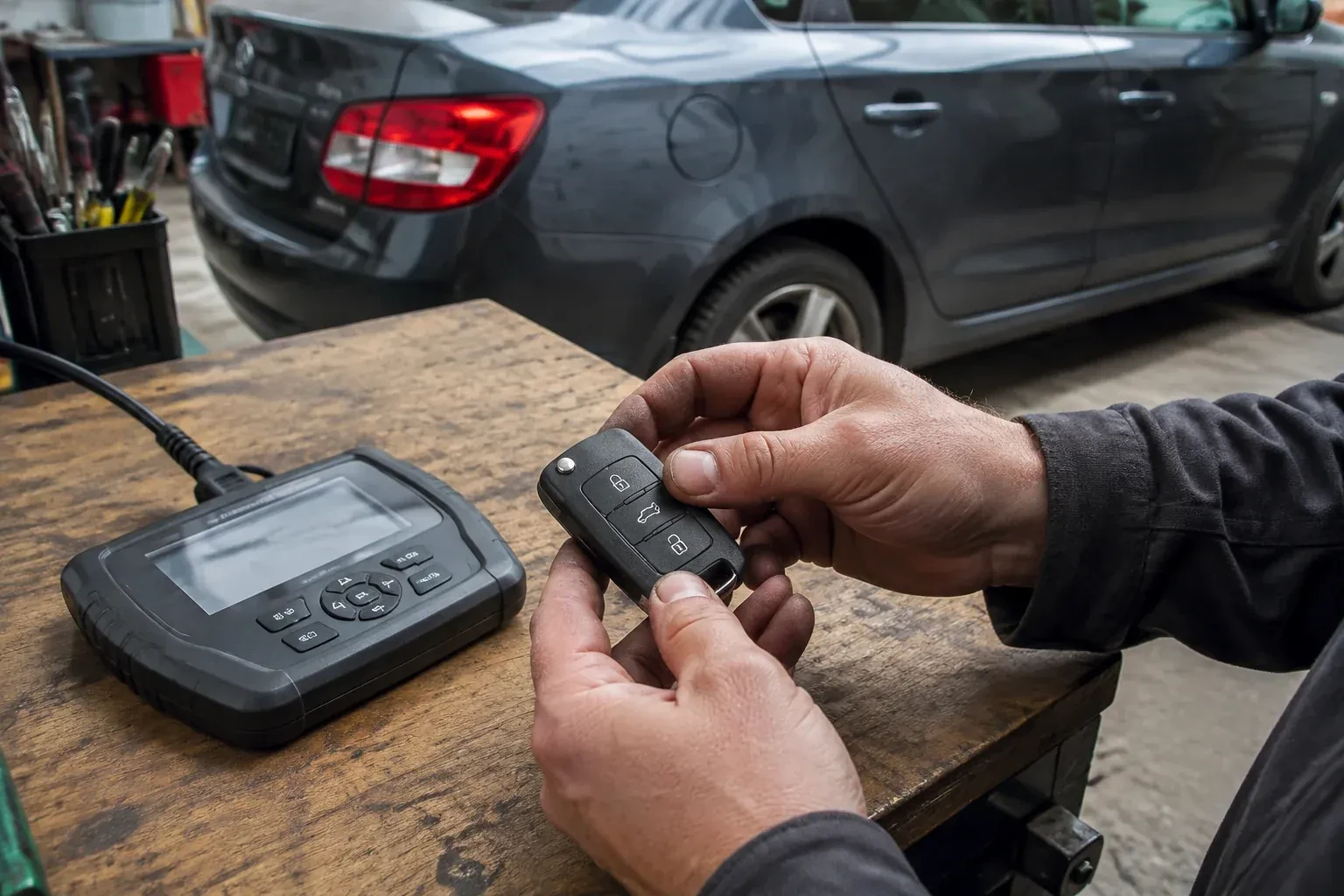
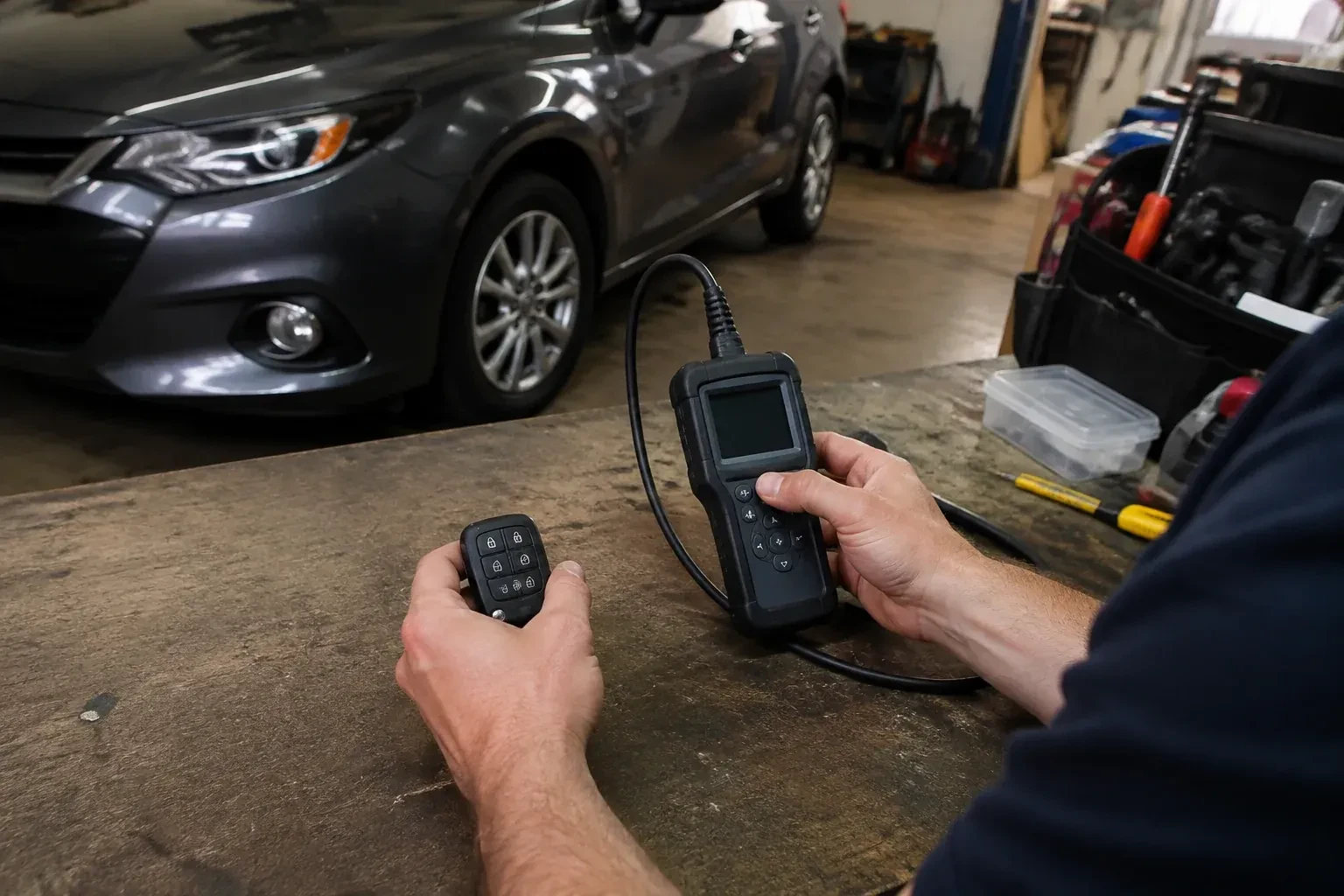
Programming writes to the vehicle's computers, so the locksmith checks the basics of the car before starting. A weak battery from a car that has sat locked for weeks is put on a maintainer so the voltage stays steady through the session. The diagnostic port under the dash has to be reachable, which means the car has to be opened first if every key is gone. Where the car is parked matters as well: an underground garage with poor light, a tight street spot or a snowbank against the driver's door all shape how the work is set up. A few questions on the phone cover most of this.
- 2
Cutting a blade to the factory code
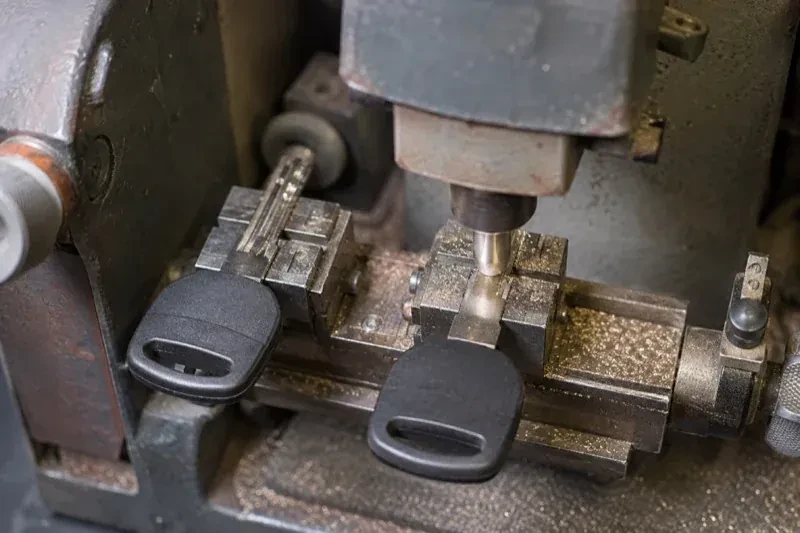
Vehicles equipped with a coded mechanical key leave the factory with a key code that describes the exact depths of its blade. When that code can be retrieved for your VIN, the locksmith enters it into a code-cutting machine, which mills a blank to the original specification rather than tracing a worn key. The result is a blade that matches the locks as they were built, seats fully in the ignition and lifts each wafer to the correct height. Cutting to code is the preferred route for any replacement, and it is the only sensible route when the existing key has worn thin or been copied several times over.
- 3
Keys that work every lock on the car
You leave with keys that have been tried, not merely programmed. Each one has opened the doors, turned or woken the ignition, started the engine and worked every button it carries, and you have watched it happen. If the car has a mechanical lock that was stiff, it has been freed and lubricated so the blade is a genuine backup. Should the old key have been rebuilt around its original electronics, it has been through the same checks as a brand-new one. The point of the routine is simple: the next time you reach for the key, there is nothing to wonder about.
In the van
- Transponder chip
- Remote-head key shell
- Remote frequency tester
- Code-cutting machine
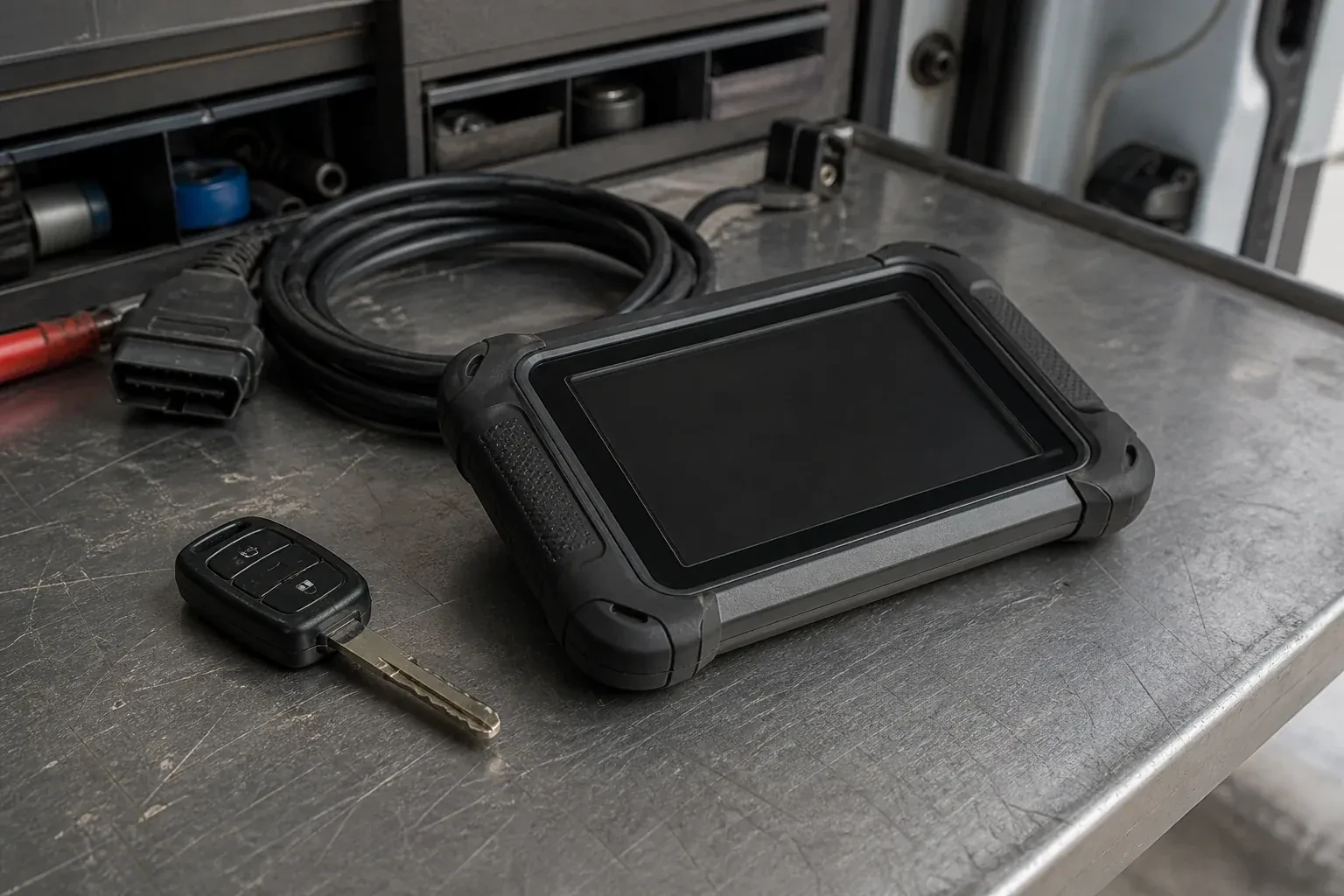
- Proximity fob with emergency blade
What affects the quote
- 1
Extracting a broken key
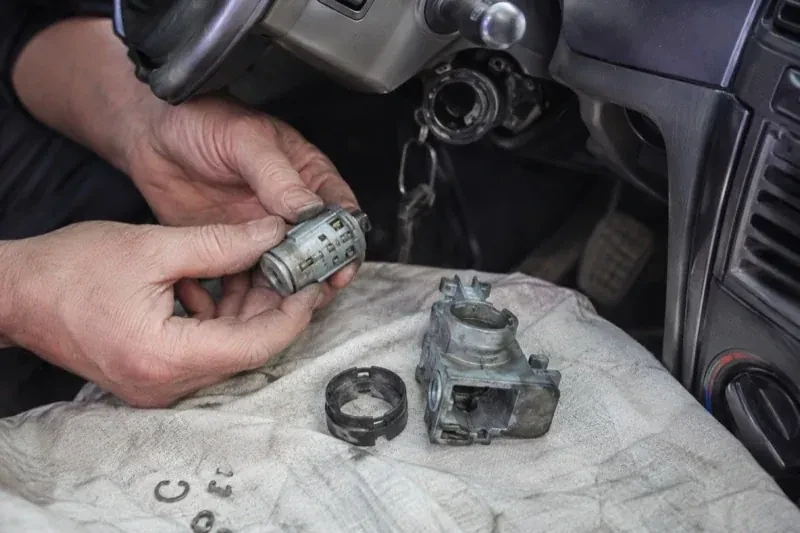
Drawing a snapped blade out of a door or ignition cylinder without harm to the lock is a separate piece of work, done before the new key is cut, and it appears on the quote as its own line.
- 2
Year, make and model
The vehicle decides the blank, the chip and the programming route. A twenty-year-old sedan with a plain transponder key and a recent proximity-start model are different jobs, and the quote follows the VIN rather than a flat figure.
- 3
Time of the call
A weekday afternoon and a holiday evening cost the same amount for a car key replacement. The locksmith confirms the exact figure on site once the vehicle, the fob type and the number of keys needed have been checked in person.
Same fees day, night or weekend.
Car Key Replacement: questions
My copied key opens the doors but the engine cuts out. Why?
The blade was copied but the chip was not. A hardware-store duplicate cut onto a plain blank has the right teeth, so it turns the locks and the ignition, yet the immobilizer hears no answer and shuts the engine off after a moment. The remedy is a proper transponder key: a blank with the correct chip, cut to your blade and programmed to the car, or a chip cloned from a working original.
What is the difference between adding a spare and replacing all keys?
Adding a spare uses an existing working key as the reference: the new blade is cut and checked against it, and the immobilizer is asked to accept one more key alongside the old. Replacing all keys starts with nothing: the lock is decoded for a blade, and the immobilizer is reset to forget every previous key before new ones are stored. The second job is longer and sometimes needs manufacturer data, one more reason to keep a spare.
What should I have ready when I call?
The year, make and model, and the VIN if you can read it through the windshield or from the permit. Whether any working key exists. Whether the car starts with a turned key or a push button, and what buttons the old fob had. Where the car is parked and whether it is locked. Your photo identification and the vehicle permit, or lease or fleet paperwork. With those, the right parts are in the van on the first trip.
Car Keys
Bigger photo, sooner job: Emergency Book soon Plan ahead
Car Key Replacement near you
Toronto, Ontario
Toronto information
- Town
- Toronto, Ontario
- In business
- 22 years
- Hours
- Open 24/7 · nights, weekends and holidays, same fees
- Phone
- (289) 804-8591
- Visits
- On-site assessment preferred. Request a visit or call.
What the census means at the door
58%
Older homes. About 58% of homes in Toronto were built in 1980 or earlier, according to the 2021 Census.
Basement and side entries on older homes were often fitted long after the house was built, with whatever lock was on hand. Bringing those doors up to the standard of the front entry, and onto the same key, is a common and satisfying job.
23%
Single-detached houses make up about 23% of homes in Toronto (2021 Census).
Landlords and property managers dominate in attached housing, and they want keys organised. A locksmith sets up master systems so a manager carries one key while each tenant's key opens only their own door.
Open 24/7
Request a visit
You bought the car privately and it came with a single key on a shoelace.
Call now · open 24/7(289) 804-8591- On-site assessment preferred
- Same fees day, night or weekend
- 22 years in business