Change or rekey · Toronto
Deadbolt Installation
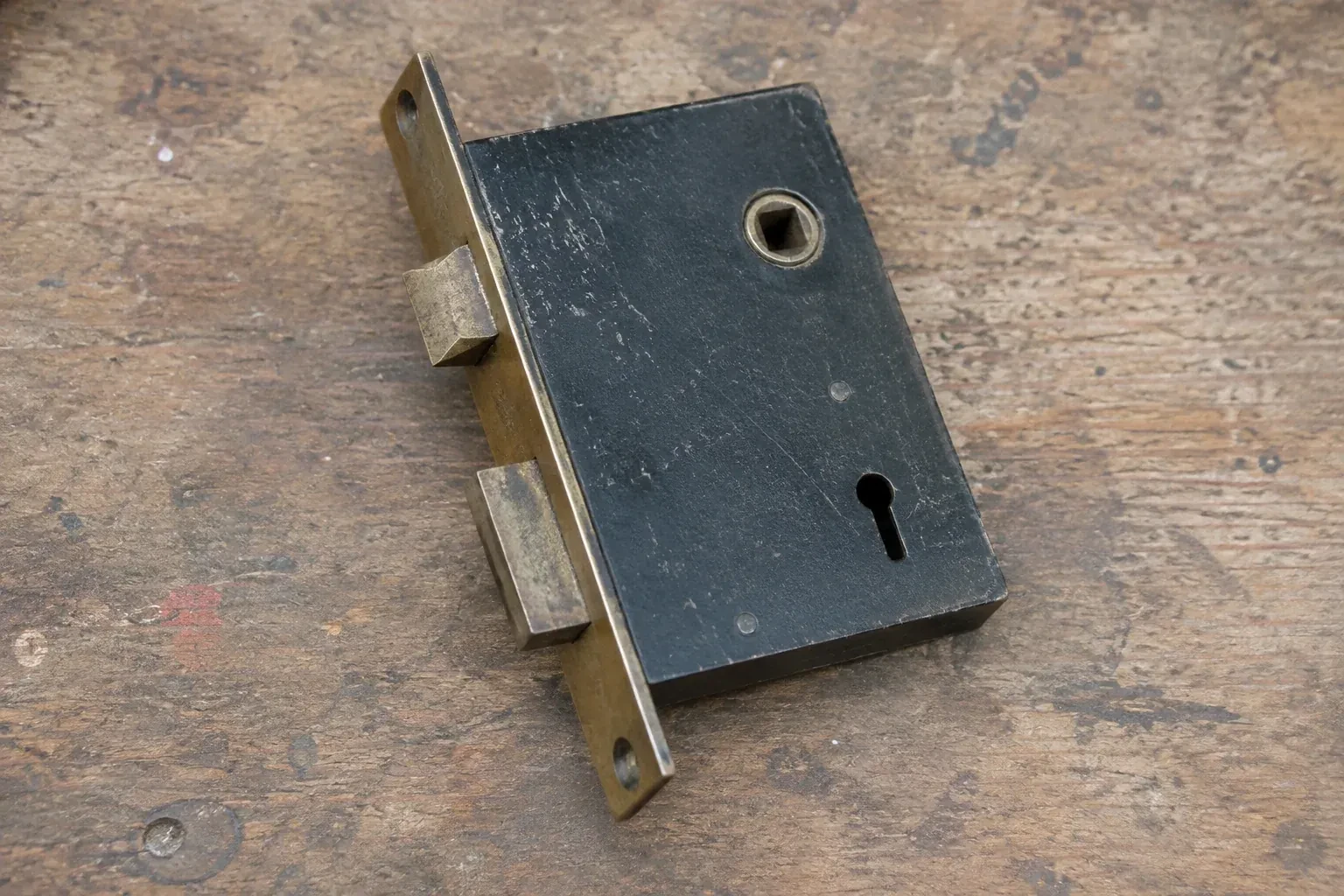
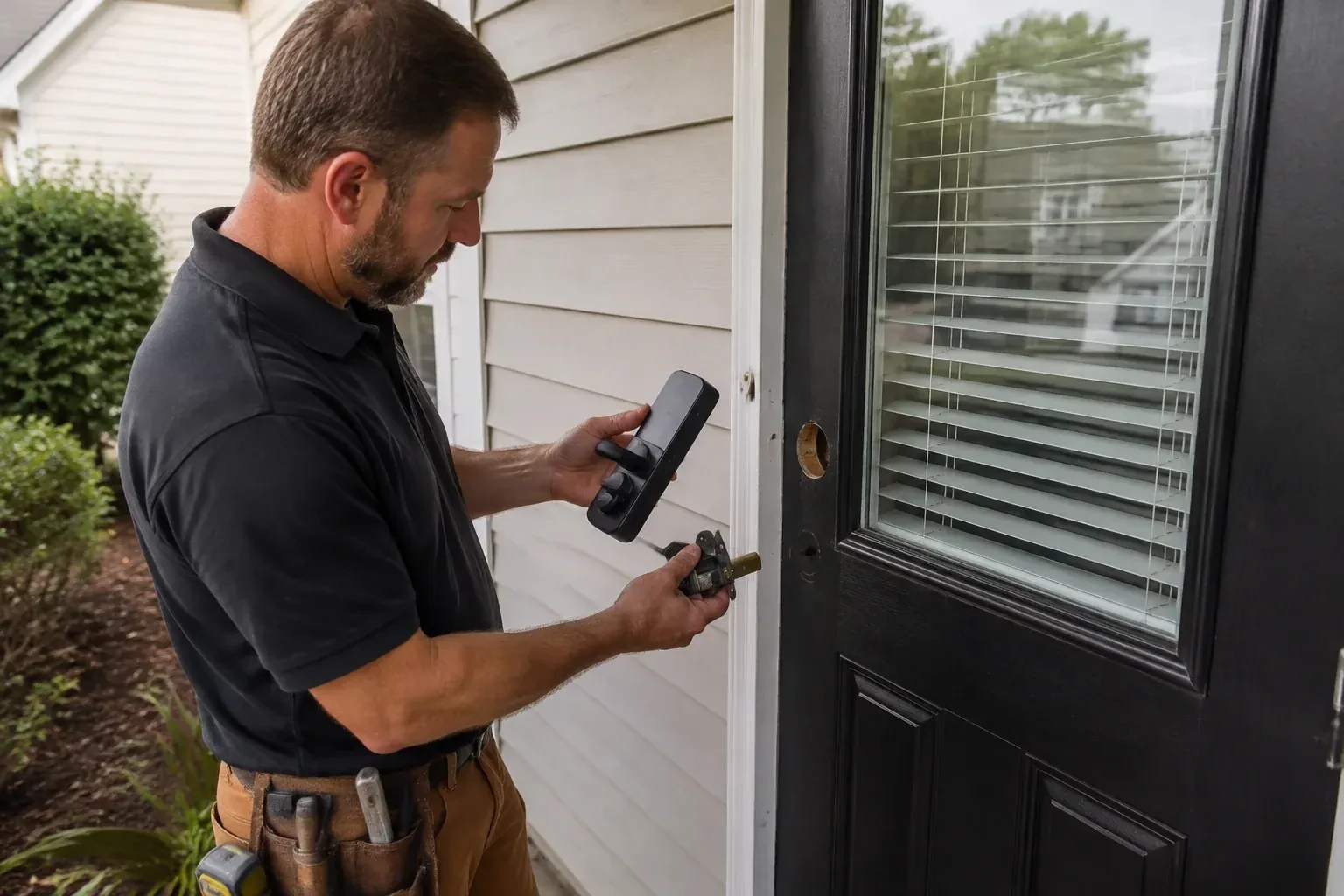
You bought a keypad deadbolt online and pulled the old one off, only to find the hole in the door is a different size and the bolt latch sits at a backset the new kit does not list. The door is now open and the box is on the counter.
Call now · open 24/7(289) 804-8591In plain words
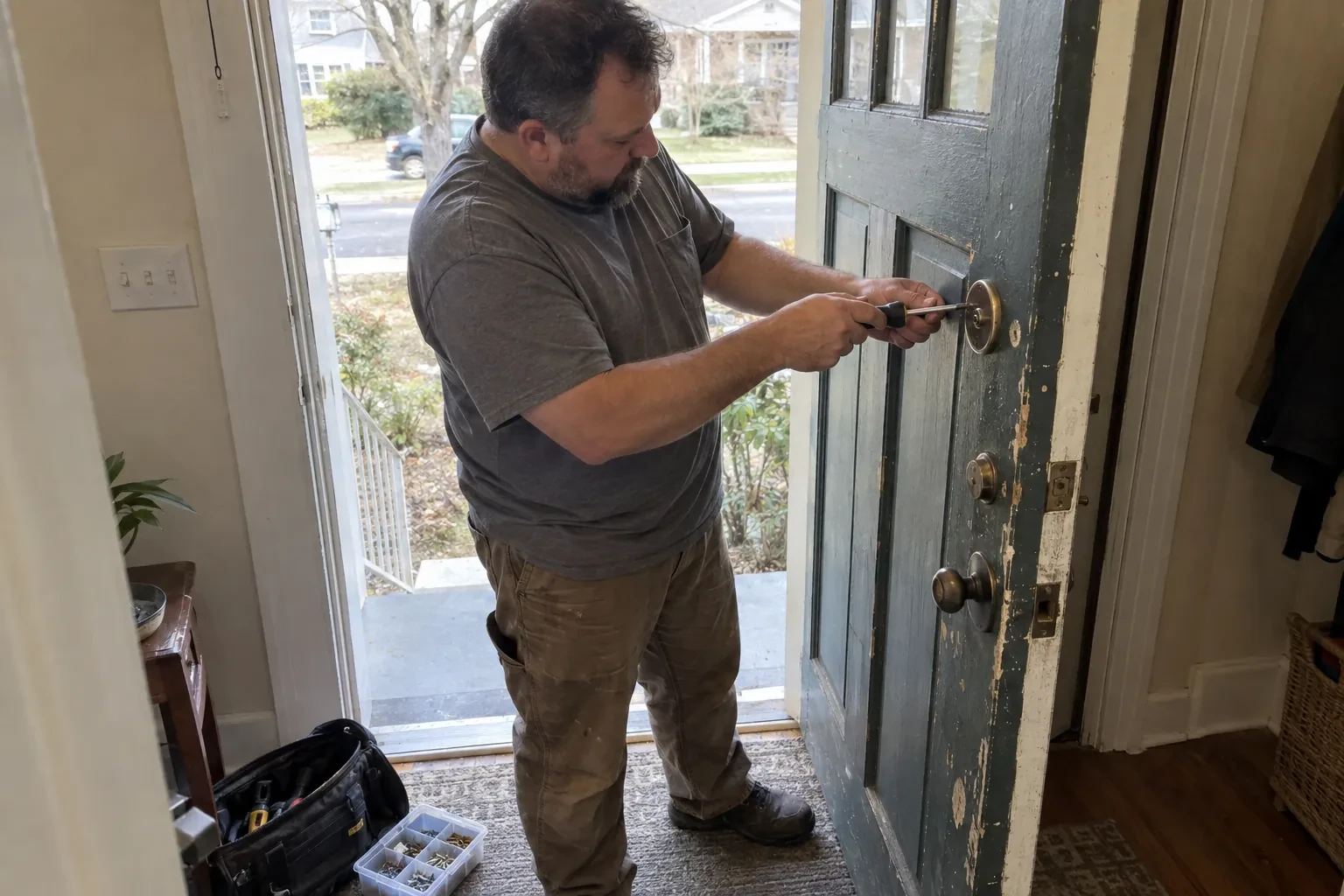
If your door already has a knob or lever bore and nothing above it, adding a deadbolt is a boring job in the literal sense. A jig clamps to the door at the right height, usually 140 to 150 mm above the knob centre, and guides a hole saw through the face and a smaller bit through the edge. The locksmith mortises the edge so the bolt faceplate sits flush, sets the bolt to the door's backset, then fits the cylinder outside and the thumb-turn inside. The frame is marked from the bolt itself, bored and chiselled for the strike, and the lock is tested open and closed.
How the visit goesThe old deadbolt has grown lazy. You turn the thumb-turn and the bolt creeps out halfway, then needs a second push with the door pulled tight. Some mornings the key has to be jiggled before it will come back out.
Deadbolt Installation · Toronto
How the visit goes
- 1
The frame behind the strike
A bolt is only as good as what it throws into, so the jamb gets a hard look before anything is ordered. The locksmith checks whether the jamb is wood or steel, whether it is backed by solid framing at lock height or by a gap of shims and air, and whether earlier screws have torn out or been stripped. A jamb that flexes under a palm tells its own story. Where a strike has been fitted before, the old pocket is examined for depth and position, since a shallow or offset pocket is the usual reason an existing deadbolt feels stiff. This check decides between a plain strike, a reinforced strike with long screws, or a full-length jamb reinforcer.
- 2
Marking and boring a fresh door
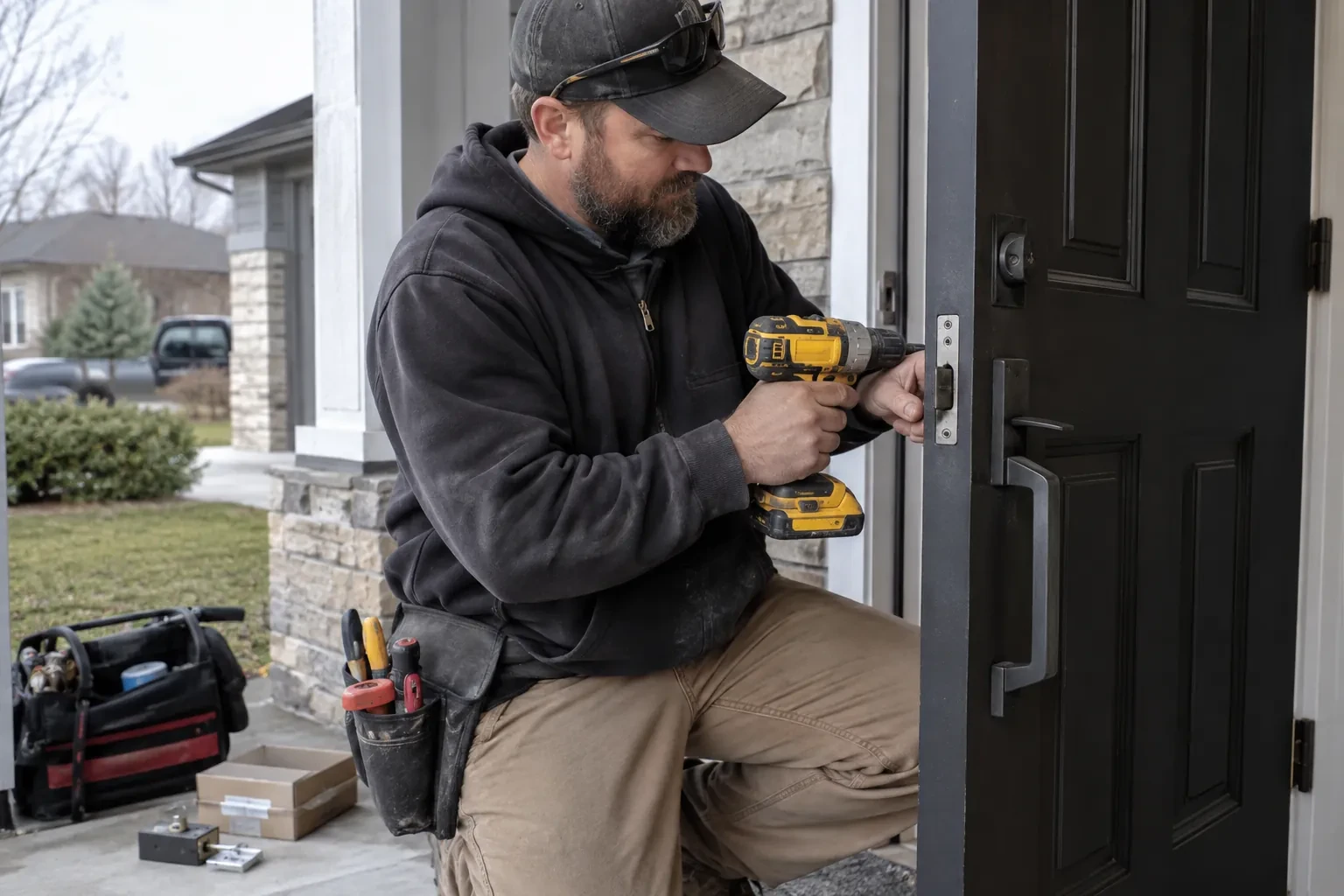
With the height agreed, the paper template is folded over the door edge and the two centres are marked: the cross bore on the face and the edge bore on the stile. A boring jig clamps over the door so the hole saw cannot wander, and the cross bore is cut from both faces to leave clean veneer or skin on each side. The edge bore is drilled with a 25 mm bit through the stile until it meets the larger hole. The locksmith then traces the bolt faceplate on the edge and chisels a shallow mortise so the plate sits flush, keeping the cut inside the lines so the edge stays sound.
- 3
A bolt with a full, deadlocked throw
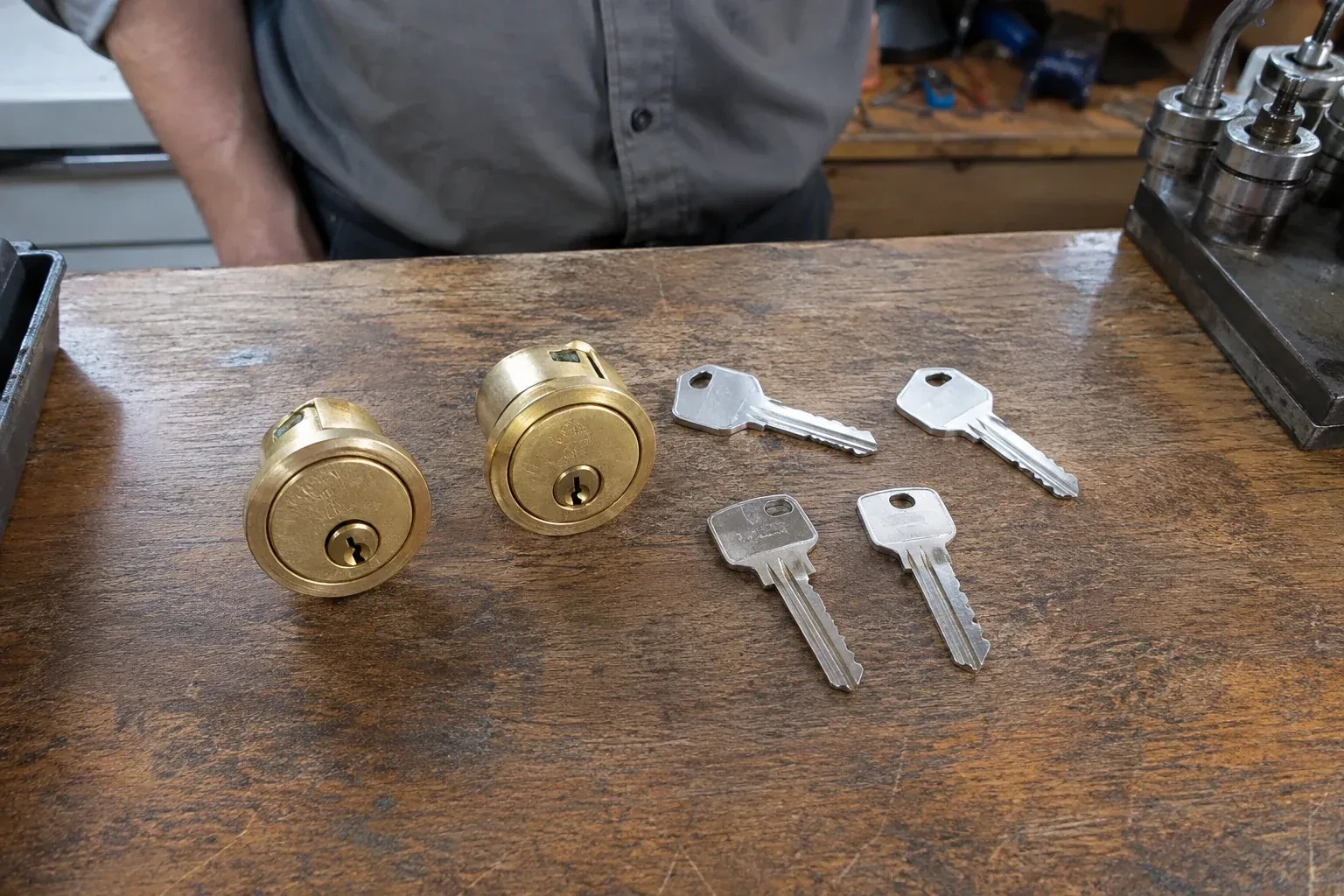
What you feel at the end is a bolt that travels its whole length into the frame with one turn and stops with a definite click, which is the deadlocking position that stops the bolt being pushed back from the edge. From outside, the key turns a cylinder that sits in a collar which spins if gripped. From inside, the thumb-turn moves the same bolt without a key. The locksmith shows you both, throws the bolt with the door closed so you hear it seat, and hands over the packaging with the model, finish and backset written on it for the day a matching lock is wanted on another door.
In the van
- Single-cylinder deadbolt
- Jamb reinforcer
- Boring jig and 54 mm hole saw
- Dry PTFE lubricant
- 75 mm (3 in) strike screws
What affects the quote
- 1
New bore or replacement into existing holes
Boring a door that has never had a deadbolt takes more time and tooling than dropping a new bolt into holes that are already there, and the quote reflects which of the two your door needs.
- 2
Finish and trim style
Coated finishes built for salt and sun, matching trim for an existing handleset, and low-profile faces cost differently from a standard brass or nickel unit, and you choose the level.
- 3
Strike and frame reinforcement
A reinforced strike with long screws is standard; a full-length jamb reinforcer, a strike box or repairs to a split jamb after a forced entry are extra items quoted on their own.
Same fees day, night or weekend.
Deadbolt Installation: questions
What happens during the visit, step by step?
The locksmith looks at the door, frame, glass and hinges, measures the bore and backset, and confirms the hardware and key plan with you. The door is bored or the old lock removed, the bolt is set to the backset, and the cylinder and thumb-turn are assembled. The strike position is marked from the bolt itself, the pocket bored, and a reinforced strike fastened into the framing. Everything is tested open and closed, keys are cut and tried, and the area is vacuumed.
Does a deadbolt work with a storm door or screen door?
It does, with one check: the thumb-turn and the outside cylinder have to clear the storm door when it closes. Most storm doors leave enough depth, but a low-profile deadbolt trim is chosen where the gap is tight. The storm door's own latch is separate and does not replace a bolt on the main door, since a screen frame gives little resistance on its own.
Can a keypad or smart deadbolt be fitted instead of a keyed one?
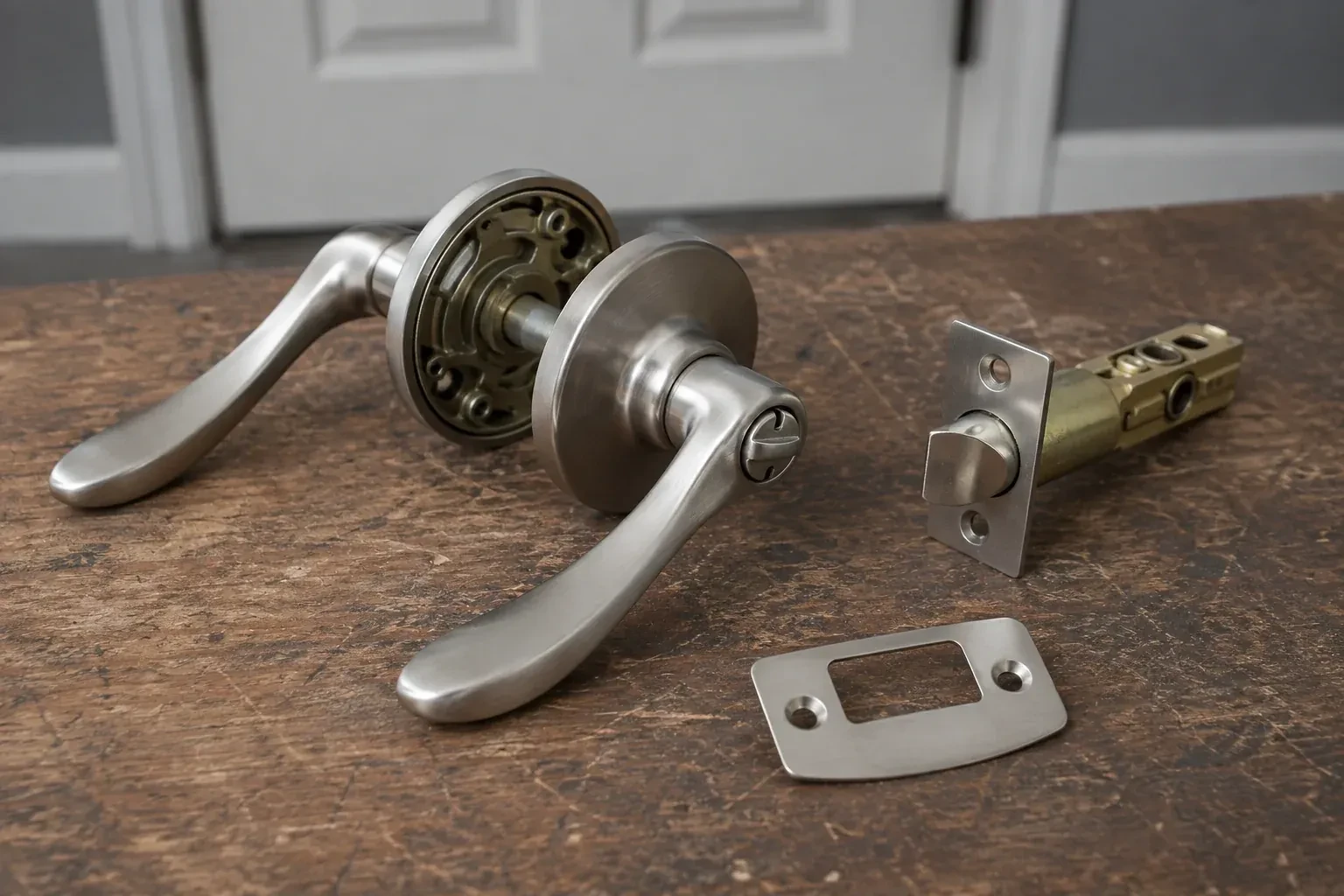
Yes, and the preparation is the same. Many electronic deadbolts use the standard 54 mm bore and the same edge bore, so a door cut for a mechanical bolt often accepts one, and a keyed bolt fitted today can usually be swapped for a keypad later, subject to that model's own bore, backset and thickness needs. The locksmith checks door thickness against the model, fits a reinforced strike as usual, sets up codes with you and shows where the backup cylinder or battery terminals are.
Deadbolt Installation near you
Toronto, Ontario
Toronto information
- Town
- Toronto, Ontario
- In business
- 22 years
- Hours
- Open 24/7 · nights, weekends and holidays, same fees
- Phone
- (289) 804-8591
- Visits
- On-site assessment preferred. Request a visit or call.
What the census means at the door
58%
Older homes. About 58% of homes in Toronto were built in 1980 or earlier, according to the 2021 Census.
Basement and side entries on older homes were often fitted long after the house was built, with whatever lock was on hand. Bringing those doors up to the standard of the front entry, and onto the same key, is a common and satisfying job.
23%
Single-detached houses make up about 23% of homes in Toronto (2021 Census).
Landlords and property managers dominate in attached housing, and they want keys organised. A locksmith sets up master systems so a manager carries one key while each tenant's key opens only their own door.
Open 24/7
Request a visit
You bought a keypad deadbolt online and pulled the old one off, only to find the hole in the door is a different size and the bolt latch sits at a backset the new kit does not list.
Call now · open 24/7(289) 804-8591- On-site assessment preferred
- Same fees day, night or weekend
- 22 years in business