Emergency Lockouts · Toronto
Lost Keys — Same-Visit Rekey
The renovation wrapped up in the spring. The crew was good, the kitchen looks right, and the key you handed the foreman on day one was never handed back.
Call now · open 24/7(289) 804-8591In plain words
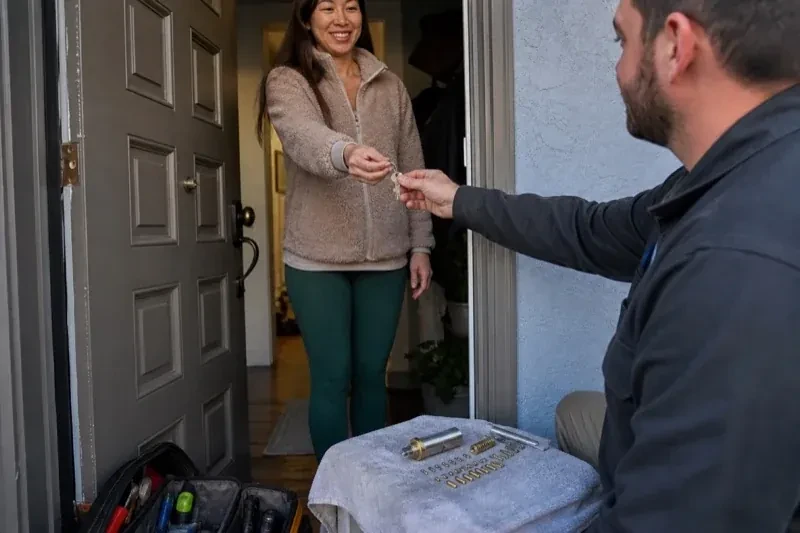
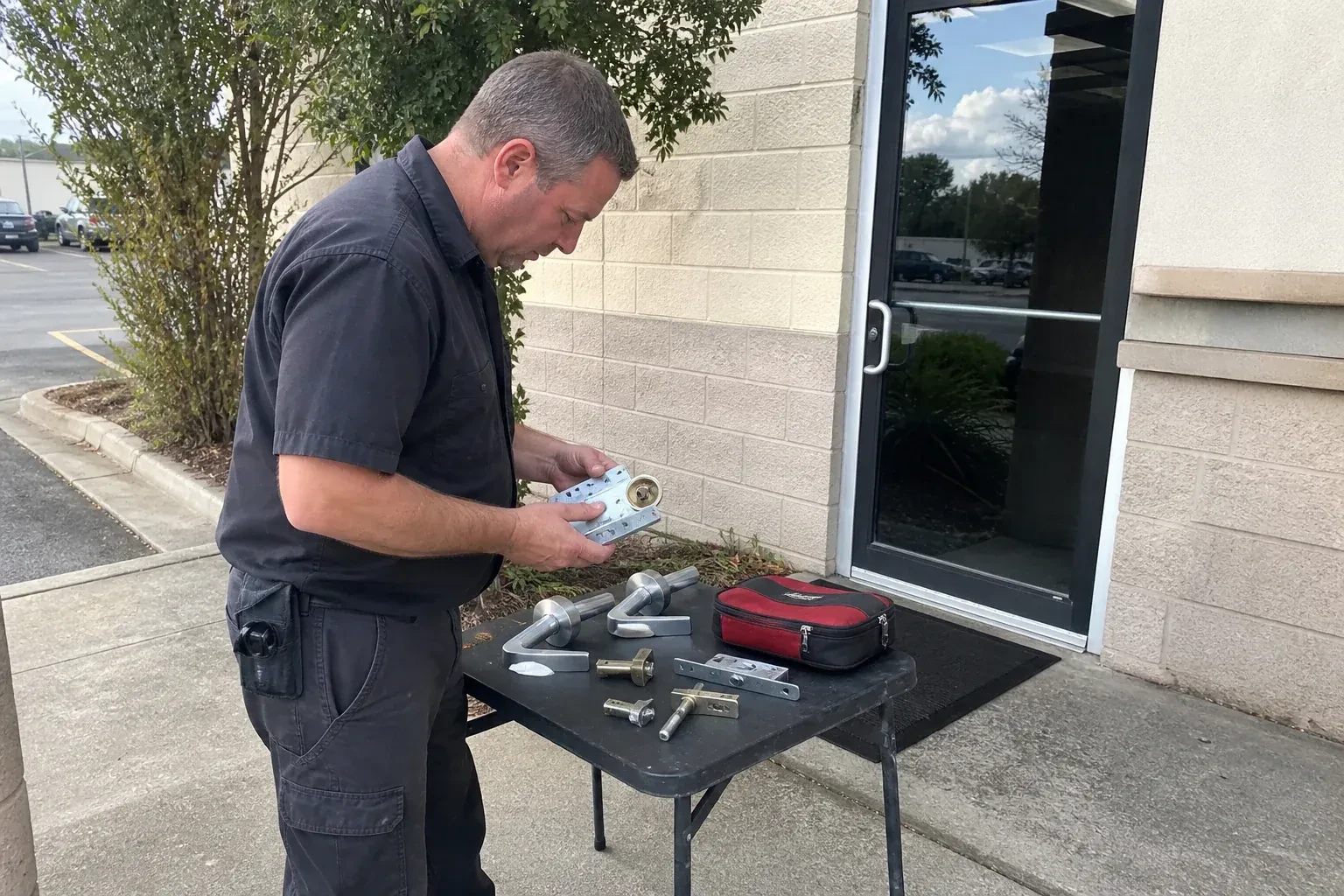
The visit runs in a steady order. On the phone you describe what was lost, which doors it opened and whether you have a way in. At the door the locksmith confirms your connection to the property, then walks it with you listing every cylinder. Each one comes off in turn, is repinned to the new key and refitted. The first key is cut to the new combination and checked in every lock, and the remaining copies are cut from it. Then every key is tried in every door with you watching, the count is agreed, and the new key code is written down for future copies.
How the visit goesThe spare under the planter by the side door is gone. Everyone in the family swears they did not take it, the planter has clearly been shifted, and you have no idea how long ago that happened.
Lost Keys — Same-Visit Rekey · Toronto
How the visit goes
- 1
Which cylinders the key actually opened
The locksmith walks the property with you and tries to think like the key. Front door deadbolt and handle, the back door, a side door, the door between the garage and the house, the shed, a gate padlock, a basement walkout, the door to a storage room or workshop. Each cylinder the missing key fitted goes on a list. Anything it fitted that is not yours to change goes on a second list: a shared lobby door, a parking gate, a community mailbox compartment, a workplace. The first list becomes the scope of the visit; the second becomes a set of calls you can make with the locksmith's help while the work goes on.
- 2
Testing every key in every lock before leaving
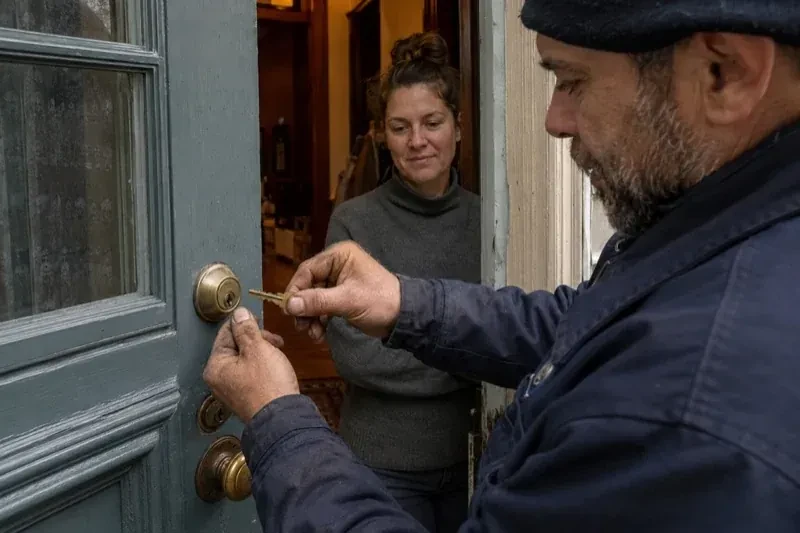
The last part of the work is deliberate repetition. Each new key is tried in each cylinder it should open, with the door open and again with it closed and bolted, so a pin that feels fine on the bench is proven on the door. The old key is tried too and shown turning nothing. Cylinders that were dry or gritty get the lubricant their maker specifies, a puff of graphite, PTFE or a specified liquid product, and a few cycles to spread it. Screws are checked snug, covers seated, and the pile of old keys and any swapped cylinders is handed to you or taken away as you prefer. Only then is the key count confirmed and written down.
- 3
The code written down for next time
The new combination is recorded as a short code, either on a card the locksmith gives you or on the key tag, and a copy stays in the locksmith's job notes if you wish. That code is what makes future copies accurate: a key cut to code has fresh, original depths, while a copy of a worn key inherits every rounded edge. It also means a lost key years from now is met with a different code, never a repeat. Keep the card with the house papers, and when a new key is needed, ask for it to be cut from the code rather than traced from a tired one.
In the van
- Dry graphite or PTFE lubricant
- Top pins and cylinder springs
- Rekeying pin kit
- Code key machine
- Cylinder retaining-clip and cap tools
What affects the quote
- 1
How many cylinders are on the list
A front door with a deadbolt and a handle is two cylinders. Add the back door, the garage entry, a side door and a shed and the count climbs, and the quote follows the number of cylinders repinned.
- 2
Electronic credentials on the same ring
Clearing a garage opener's memory and re-pairing remotes, changing keypad codes or helping report a building fob are small tasks the quote names separately.
- 3
Outbuildings, gates and padlocks
Sheds, gates and detached garages often carry padlocks or light cylinders. Bringing them onto the house key may mean a new padlock of a matching keyway, quoted as a part.
Same fees day, night or weekend.
Lost Keys — Same-Visit Rekey: questions
Should I rekey after a renovation or when a cleaner stops coming?
It is good practice whenever a key has been out of your hands for a while and you are not certain it came back. Contractors, cleaners, sitters and short-term guests all have honest reasons to hold a key, and most return it, but a rekey at the end of the arrangement is what turns 'probably' into certainty. Some households make it a habit at the close of every project.
Do I have to prove I live here before you rekey?
Yes, and it is a step that protects you. A rekey changes who can open the door, so the locksmith confirms the person asking has the standing to decide: photo identification matched to the address for an owner, a lease or bill for a tenant, management records for a superintendent or property manager. Say on the phone what you have so the visit starts smoothly.
Can a rekey be done in winter, and will the locks freeze afterwards?
Winter is a normal time for this work. Cylinders come off the door and are pinned in the van, out of the wind, and go back on with a dry graphite or PTFE lubricant that sheds moisture rather than holding it the way oil does. A cleaned, dry-lubricated cylinder is less likely to freeze than the gritty one it replaced. Keeping a storm door closed over the main lock helps through freeze-thaw weeks.
Lockout Services
 EmergencyHome Lockout ServiceThe keypad on the smart lock blinks once and goes dark.
 EmergencyBusiness Lockout ServiceYou signed the lease on the unit last week and the landlord handed over possession, but the previous tenant's locks are still on…
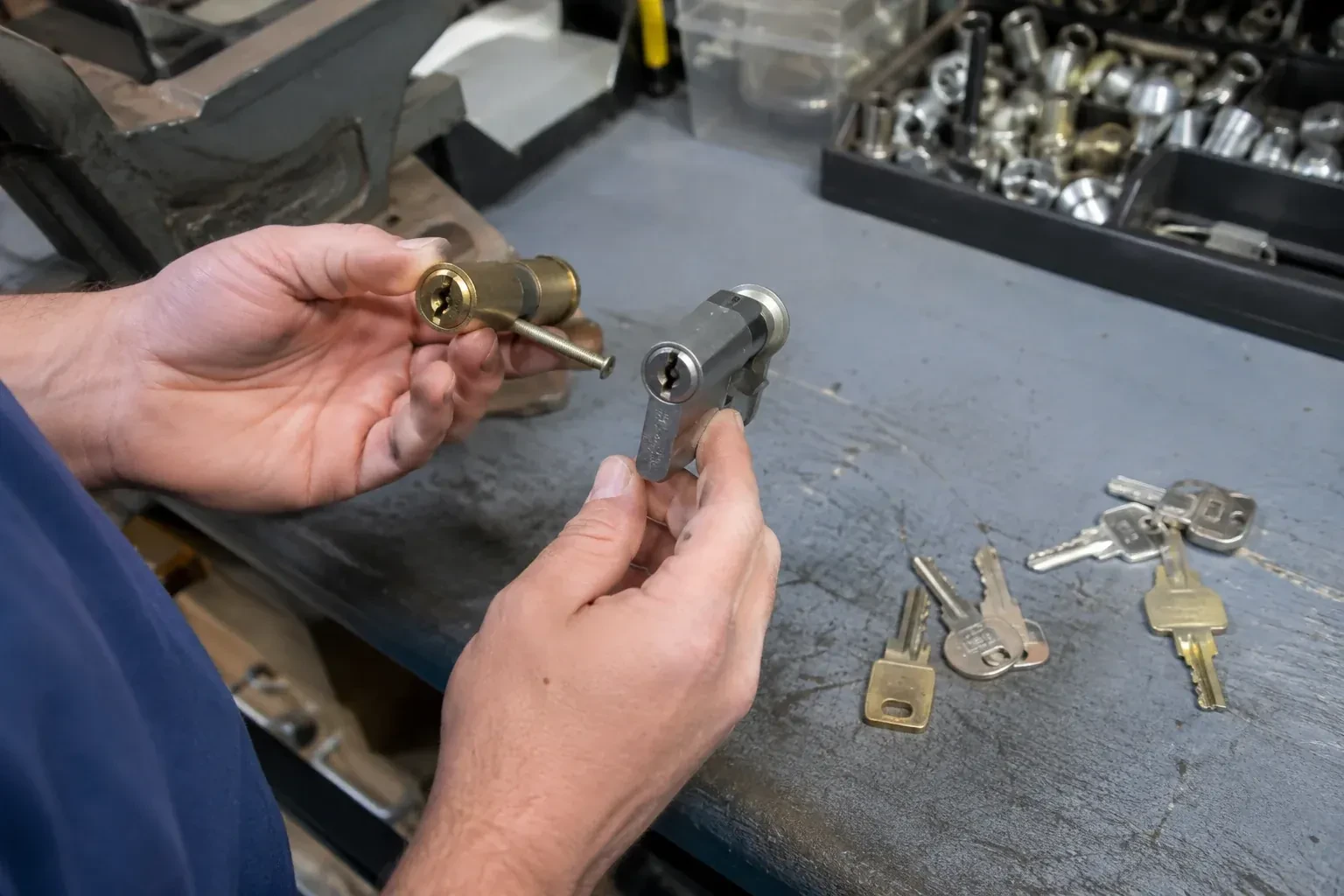 EmergencyBroken Key ExtractionYou were locking up on the way out when the key broke in the lock.
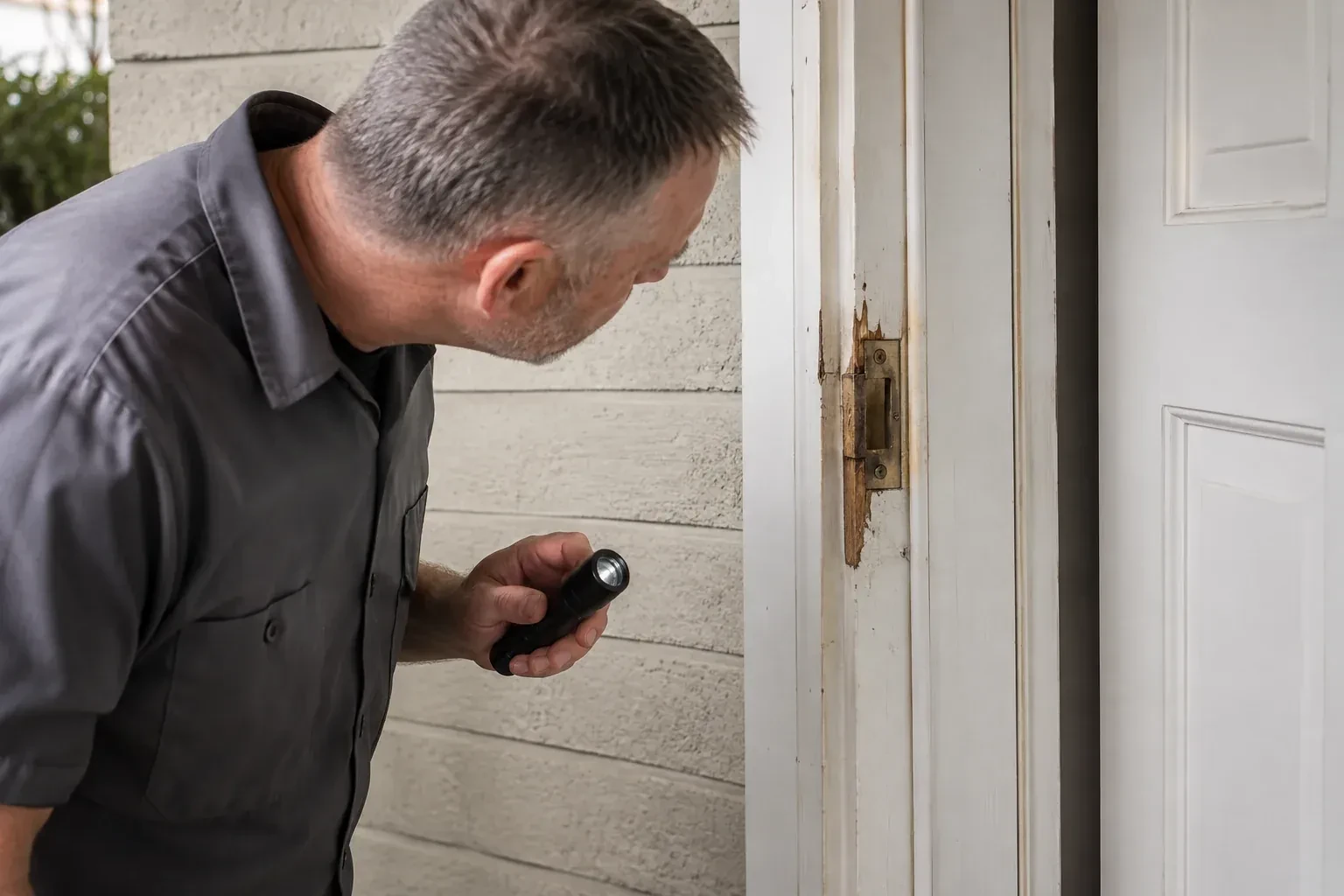 EmergencyBreak-In Damage Lock RepairThey did not get in.
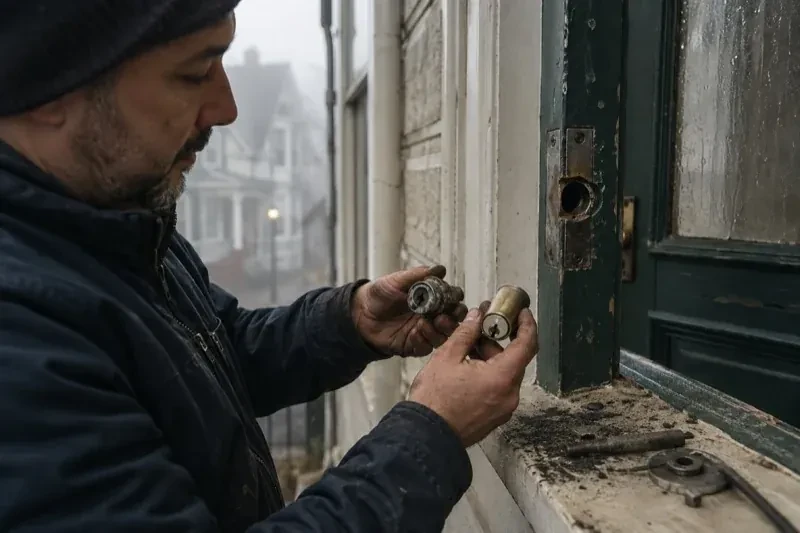 EmergencySeized & Jammed Lock OpeningThe key turns a full circle without any resistance and the deadbolt stays exactly where it is.
Lost Keys — Same-Visit Rekey near you
Toronto, Ontario
Toronto information
- Town
- Toronto, Ontario
- In business
- 22 years
- Hours
- Open 24/7 · nights, weekends and holidays, same fees
- Phone
- (289) 804-8591
- Visits
- On-site assessment preferred. Request a visit or call.
What the census means at the door
58%
Older homes. About 58% of homes in Toronto were built in 1980 or earlier, according to the 2021 Census.
Basement and side entries on older homes were often fitted long after the house was built, with whatever lock was on hand. Bringing those doors up to the standard of the front entry, and onto the same key, is a common and satisfying job.
23%
Single-detached houses make up about 23% of homes in Toronto (2021 Census).
Landlords and property managers dominate in attached housing, and they want keys organised. A locksmith sets up master systems so a manager carries one key while each tenant's key opens only their own door.
Open 24/7
Request a visit
The renovation wrapped up in the spring.
Call now · open 24/7(289) 804-8591- On-site assessment preferred
- Same fees day, night or weekend
- 22 years in business