Commercial · Toronto
Commercial-Grade Lock Replacement
Head office wants every branch keyed alike under one system, and half the locations are still running whatever lockset the original contractor happened to install years ago.
Call now · open 24/7(289) 804-8591In plain words
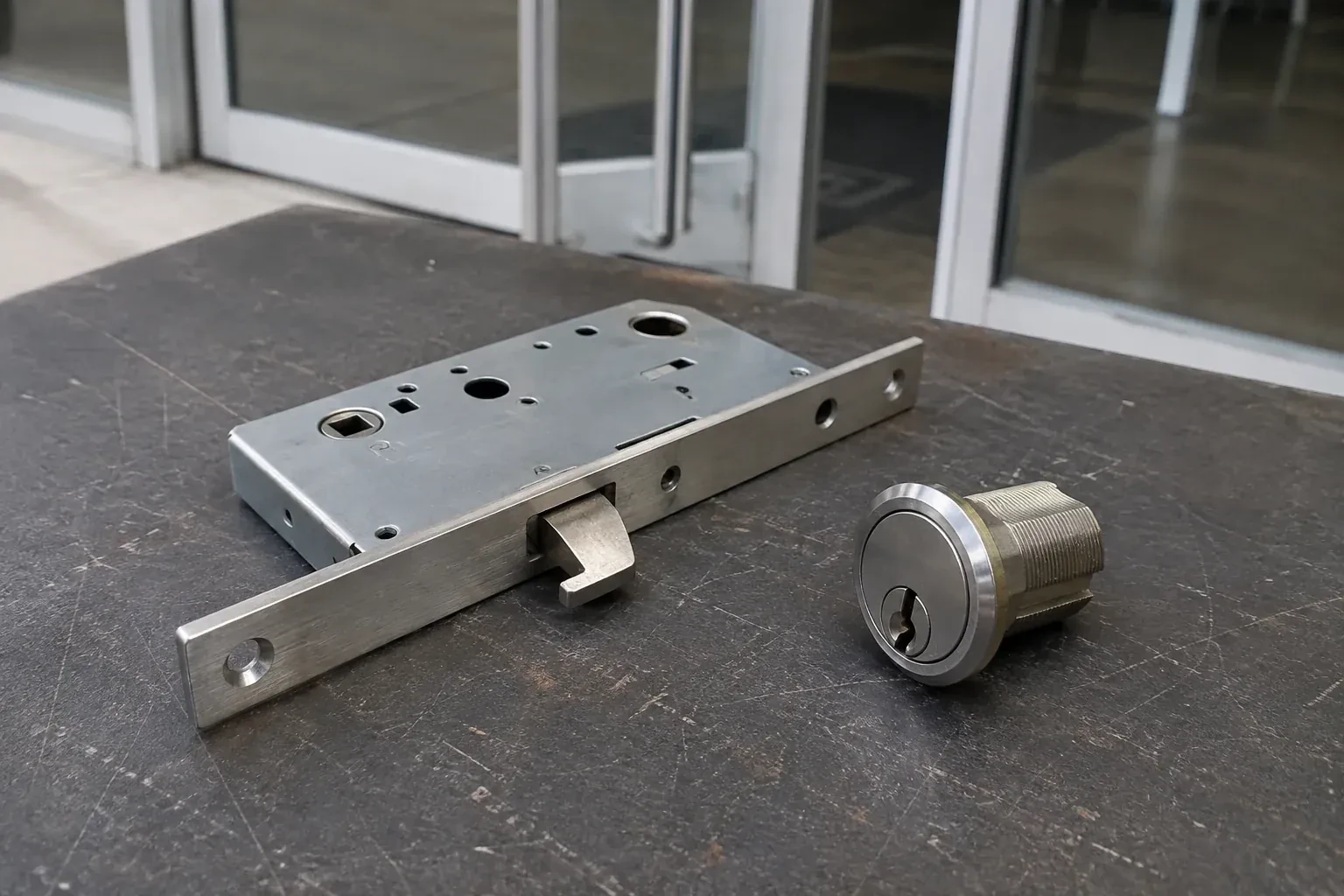
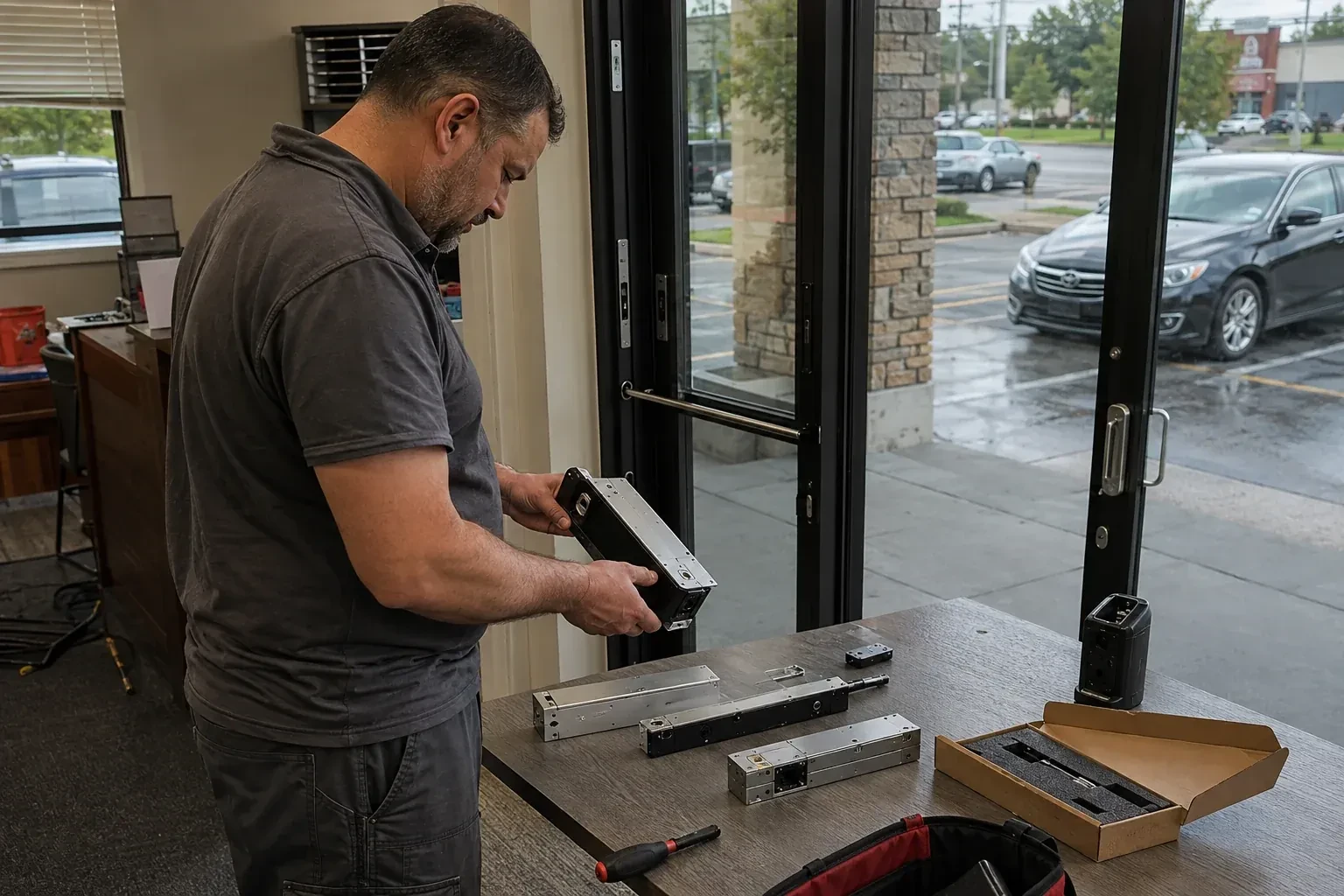
Commercial-grade lock replacement swaps hardware that is worn, damaged, mismatched or simply not rated for a business door with hardware built for that duty: a mortise lock body, a heavy cylindrical lockset, or a narrow-stile lock or hookbolt for an aluminum storefront door. The locksmith reads the door's construction, the traffic the opening takes, and any key or access-control system already running before choosing a replacement. New hardware is keyed into that existing system rather than left to stand on its own, so one business ends up with one coherent set of locks instead of a patchwork of whatever was fitted door by door over the years.
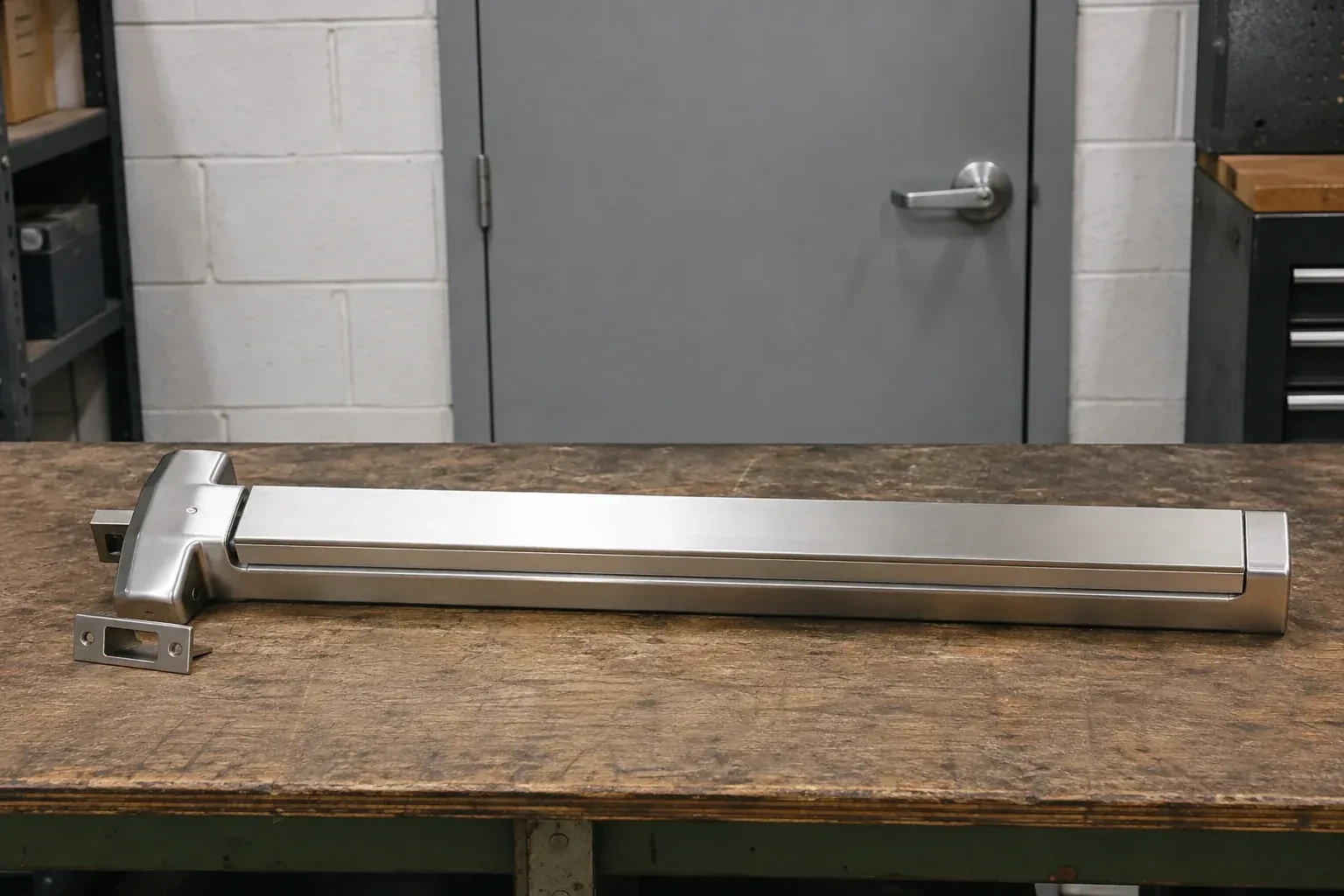
How the visit goesAn inspection report flagged the rear exit as needing hardware that opens with one motion and no key, and that door currently has an ordinary keyed knob on the inside.
Commercial-Grade Lock Replacement · Toronto
How the visit goes
- 1
Finding what else is already wired to the door
Many commercial openings carry more than a mechanical lock: an electric strike, a maglock, a door position switch feeding an alarm panel, or a card reader tied to an access-control system. The locksmith identifies everything already connected to the opening before ordering replacement hardware, since a new lock has to coexist with that wiring rather than replace it by accident. Where the connected hardware is the actual source of the problem, that gets flagged separately rather than folded silently into a mechanical lock replacement.
- 2
Connecting any electrified or access-control hardware
Where the opening already carries an electric strike, a maglock, a door position switch or a card-reader tie-in, that wiring is reconnected to the new mechanical hardware and tested together rather than assumed to still line up. Voltage, fail-safe or fail-secure operation, and monitoring contacts are confirmed against what the access-control or alarm system expects, since electrified hardware that is almost, but not quite, matched to the mechanical lock is a common source of a door that buzzes open but still needs force.
- 3
One key system instead of a patchwork
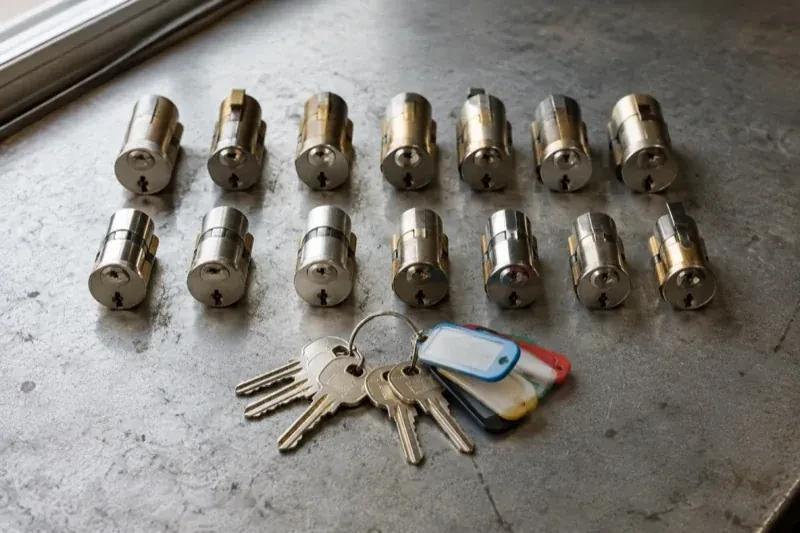
Where the visit brought hardware onto a shared master or interchangeable-core system, the business now has one coherent structure instead of a different cylinder on every door. A master key opens what it is supposed to, sub-master and change keys are limited to their own doors, and the key-control log reflects exactly who was issued what. The next time a lock needs attention, whoever handles it can read that log rather than guessing at what system, if any, the previous hardware belonged to.
In the van
- Restricted keyway cylinder
- Hookbolt and deadlatch hardware
- Mortise prep and installation tools
- Key cutting and coding machine
- Key-control log and tags
What affects the quote
- 1
Grade and duty rating of the lock
Hardware built for higher cycle counts and rougher daily handling costs more than a lighter-duty equivalent, and the right grade for a busy delivery door is not the same as for a quiet interior office.
- 2
Number of doors involved
One entrance is the simplest case. Bringing several doors, or several branch locations, onto matching hardware or one key system in the same engagement is priced across the whole set rather than door by door in isolation.
- 3
Keying complexity
A single stand-alone cylinder is the simplest keying job. A master or grand-master structure spanning multiple doors, departments or locations takes more planning and more cylinders to combinate correctly, and that planning is part of the quote.
Same fees day, night or weekend.
Commercial-Grade Lock Replacement: questions
Why would my business need panic or exit hardware?
Once a space holds enough people, or handles a high enough hazard, its exit doors need to open with a single motion and no key, which is what panic or exit hardware provides. It is not a preference; it is a function tied to how many people the space is built to hold and what is happening in it.
My storefront door is aluminum and glass. Does it need special hardware?
Yes. An aluminum storefront door has a narrow stile, the vertical metal frame around the glass, that a standard mortise or cylindrical lock cannot physically fit into. These doors take a narrow-stile lock or a hookbolt built specifically for that slim profile, and matching the hardware to the frame is what lets the bolt engage the keeper fully instead of catching at an angle.
What is a grand-master key system, and does a small business need one?
A grand-master system adds a layer above a standard master key, useful for a business with several buildings or departments where one senior key should open everything and mid-level keys should open only their own area. A single-location business with a handful of doors usually only needs a straightforward master and change-key structure, without the extra layer.
Commercial-Grade Lock Replacement near you
Toronto, Ontario
Toronto information
- Town
- Toronto, Ontario
- In business
- 22 years
- Hours
- Open 24/7 · nights, weekends and holidays, same fees
- Phone
- (289) 804-8591
- Visits
- On-site assessment preferred. Request a visit or call.
What the census means at the door
58%
Older homes. About 58% of homes in Toronto were built in 1980 or earlier, according to the 2021 Census.
Basement and side entries on older homes were often fitted long after the house was built, with whatever lock was on hand. Bringing those doors up to the standard of the front entry, and onto the same key, is a common and satisfying job.
23%
Single-detached houses make up about 23% of homes in Toronto (2021 Census).
Landlords and property managers dominate in attached housing, and they want keys organised. A locksmith sets up master systems so a manager carries one key while each tenant's key opens only their own door.
Open 24/7
Request a visit
Head office wants every branch keyed alike under one system, and half the locations are still running whatever lockset the original contractor happened to install years ago.
Call now · open 24/7(289) 804-8591- On-site assessment preferred
- Same fees day, night or weekend
- 22 years in business